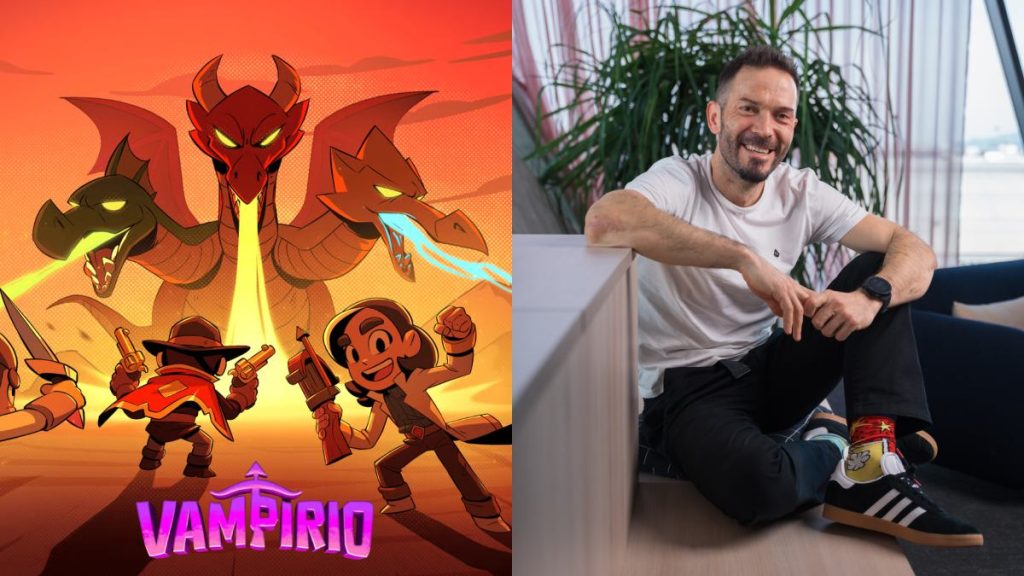

- Outfit7 shifts to small “Cell” teams to drive innovation and ownership.
- Each team manages hiring, costs, and proves ideas through performance metrics.
- Vampirio emerges as a breakout success from this experimental Cell Project model.
Few mobile gaming companies have managed to stay consistently relevant while bringing so many interesting new experiences, the way Outfit7 has. Known for building one of the most recognizable character-driven ecosystems in mobile gaming, the company has continued to experiment with how games are created and has found continued success.
We had the opportunity to sit down with Jernej Česen, COO and General Manager at Outfit7, who took us inside one of the most interesting shifts happening at the company right now: a move toward smaller, independent teams trusted to build beautiful ideas.
The cell philosophy that breathed life into the roguelike experience
While many associate the company strictly with the massive Talking Tom & Friends ecosystem, our conversation delved into the experimental aspects. We spoke at length about Vampirio, a breakout hit that didn’t just happen by accident; it was the result of an internal restructuring, which Jernej calls the “Cell Project.”
“Let’s create and give the chance to the small team or small owners to run their own business,” Česen said, describing the core philosophy behind the cell structure. “You are the master of your future assembly of team, however you want, you are responsible for the cost, proving to the numbers that you will get the resources for the global release,” he shared.

Each team is responsible for assembling talent, managing costs, and proving their concept through results. The idea is simple but demanding. If the numbers work, the project moves forward. If not, it stops.
Vampirio (internally known as Van Helsing) started as one of these ideas. A small team took charge and began working in short cycles, testing, releasing, and improving step by step. “They were testing, releasing, and the game was showing ultra-positive results,” Česen said.
Jernej shared with us that he himself is a fan of the genre, citing classics like Plants vs. Zombies and Swamp Attack as personal favorites. However, Vampirio needed to be more than just another “survive the night” clone.
“For me, it’s like a tower defense game. You build it, you want to defend, but instead of being just defending the position, you are actively depending on the position as a hero character would have the capability of building his own base.”
Vampirio’s journey from testing to the hurdles and the success
The team focused on a “quick and dirty testing” phase to validate the core loop. Early results in user engagement and conversion were “ultra-positive” from day one, but Jernej was candid about the hurdles they faced as the project went on.
“The results were great. The first five days of engagement were really high. But then the curve was like flattened,” he explained. The issue was not the core gameplay, but the lack of content to sustain players over time.
Games like Vampirio rely on a stable, long-term player base. Jernej detailed this experience as something the team thought of as “either go big or go home”, with the targets being “insane”, improving retention by five percentage points.

However, when the data finally came back positive just weeks ago, the reaction was: “Yeah, we are going into it!”
The success of the “Cell” model has led to a permanent change in Outfit7’s organizational chart. Jernej credits Vampirio’s leader, Vasyl Novskyi, who has transitioned from a cell owner to a Deputy VP of a new division within the Outfit7 Cell Group.
Jernej confirmed that the game is now officially targeting a global release in the last quarter of 2026, specifically aiming for a launch around Halloween, with the group now an official new division in the Outfit7 group.
More stories for you:
For more Mobile Gaming news and updates, join our WhatsApp Channel, Telegram Group, or Discord server. Also, follow us on Instagram, Twitter and Google News for quick updates.
PakarPBN
A Private Blog Network (PBN) is a collection of websites that are controlled by a single individual or organization and used primarily to build backlinks to a “money site” in order to influence its ranking in search engines such as Google. The core idea behind a PBN is based on the importance of backlinks in Google’s ranking algorithm. Since Google views backlinks as signals of authority and trust, some website owners attempt to artificially create these signals through a controlled network of sites.
In a typical PBN setup, the owner acquires expired or aged domains that already have existing authority, backlinks, and history. These domains are rebuilt with new content and hosted separately, often using different IP addresses, hosting providers, themes, and ownership details to make them appear unrelated. Within the content published on these sites, links are strategically placed that point to the main website the owner wants to rank higher. By doing this, the owner attempts to pass link equity (also known as “link juice”) from the PBN sites to the target website.
The purpose of a PBN is to give the impression that the target website is naturally earning links from multiple independent sources. If done effectively, this can temporarily improve keyword rankings, increase organic visibility, and drive more traffic from search results.